How to Prepare a Well Water Cabin for Guests
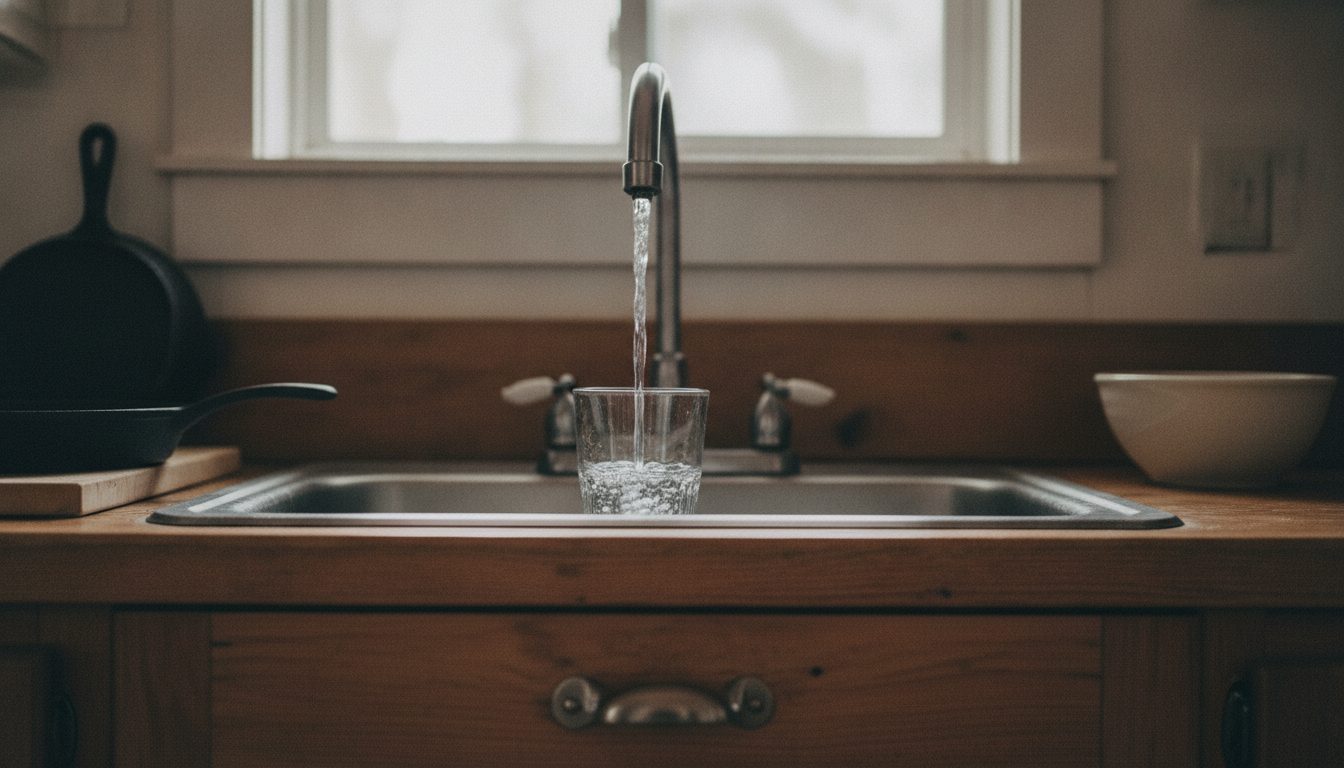
Run every tap until the water is clear. Check the pressure, the clarity, and the sediment filter while you are there. Confirm nothing smells off before you leave. That short routine is most of what it takes to prepare a well water cabin for guests, and it catches problems before anyone turns a faucet.
Run the water before guests arrive
A well that has sat unused between bookings needs to run before anyone drinks from it or showers in it. Between normal turnovers, a few minutes per tap is enough. After the cabin sits empty for a month or more, a common guideline is 10 to 15 minutes per tap, until the water runs clear and cold. Trapped air and stale water in the lines work their way out in that time.
- Open every tap, outdoor spigots included, and run until the water is clear
- Check pressure at the kitchen sink and the bathroom farthest from the pressure tank
- Fill a clear glass from the kitchen tap and look at it in daylight
- Smell the first hot and cold draw for sulfur or metal
- Check the sediment filter, softener salt, and any UV lamp date
- Note anything off and call a well professional before check in
Flush the water heater too if the property has been empty for weeks. Standing water in a tank picks up more mineral taste and smell than water that moves regularly. A guest's first shower is a bad moment to discover that.
Check pressure and clarity
Low pressure at more than one fixture points toward the well system itself rather than a single clogged faucet. Low pressure at just one tap is more likely a local issue with that fixture. Note which one it is. Check it before assuming the whole well needs attention.
Judge clarity in daylight, where color and cloudiness actually show. Water should run clear within a minute of the tap opening. Cloudiness that clears fast after the initial rush is common and usually fine. Cloudiness that does not clear is worth investigating before guests see it first. So is any color beyond a faint mineral tint.
Filters, softeners, and UV systems
If the cabin has a sediment filter, open the housing and look at the cartridge. A cartridge gone dark or brown is spent. Manufacturers commonly suggest replacing them every 3 to 6 months, sooner where the water carries sand or fine grit. Keep two spares at the cabin, so a caretaker can swap one without a supply run.
A water softener needs its brine tank checked on the same visit. Keep it roughly half full of salt, and break up any hard crust that has bridged over the water. A softener that runs out of salt does not fail loudly. The water just turns hard again, and guests notice it in the shower before you do.
If the system includes a UV purifier, check the lamp's replacement date. Most manufacturers rate UV lamps for about a year of continuous use. Replace on schedule even if the lamp still glows, because output fades before the light does. Wipe the quartz sleeve when you change the lamp, and follow the manufacturer's instructions for both jobs.
Signs that call for a professional
Persistent low pressure across the whole property is a reason to call a licensed well professional. So is water that will not run clear, or a pump that cycles on and off more than it should. Do not try to diagnose the system yourself. Wells involve pressure tanks, pumps, and pipe depths that are not safe or practical for a host to troubleshoot alone.
Timing is the whole game here. When I walked properties before guest arrival to confirm they were ready, water was always an early stop on the route, because a problem found on that walk still left days to fix it. A sputtering tap or a glass that stayed cloudy meant the call went out the same day. Do not wait and hope it resolves on its own.
Seasonal well considerations
A well that ran fine all summer can behave differently after a hard freeze or a long dry stretch. The same check that felt routine in July deserves a closer look at the start of a new season. Frozen or thawing pipes near the wellhead need a visual check. If your property goes through a longer seasonal closure, work the well check into your spring opening checklist so it never depends on memory.
A dry spell can lower a well's output enough that pressure drops during a full house of guests. A quieter week may never reveal the problem at all. Well output also shifts with the water table, which rises and falls with rain and snowmelt. A well that ran strong in June can run weaker by late August in a dry year. Check pressure at the start of the season and again midway through it. That catches a slow decline before a full house forces the issue.
Build the check into your turnover
A well check works best as a fixed step in your turnover routine, not a thing you remember when a guest complains. Add it right after the cleaner finishes, before the property gets locked up for the next arrival. That order matters. A well run before cleaning wastes the effort if nobody checks it again before check in.
If a cleaner or caretaker handles turnovers without you present, write the well check into their list. Spell out the exact steps from the numbered list above. A vague instruction like "check the water" gets skipped the same way a vague septic sign gets ignored. The well water pack includes a printable pre arrival checklist built for exactly this handoff.
What guests should know once they arrive
Once the well checks out, guests still benefit from a short note about what is normal for that specific property. A line about mineral taste or light cloudiness after rain heads off a message you would otherwise get mid stay. What to tell guests about well water covers exact wording for that note.
If you have not tested the water recently, is well water safe for rental guests walks through testing schedules and when bottled water is the safer call.
And if a check fails close to arrival and a professional cannot come in time, tell the guest before they ask. Stock bottled water for drinking and cooking, say what is being fixed and when, and keep the update short. Guests handle a known issue far better than a surprise at the tap.

When to Call a Professional for a Rental Hot Tub Problem
Electrical faults, a cracked shell, and stubborn cloudy water need a licensed technician. A stuck jet or tired filter can wait for checkout.
Trash Rules to Post for Guests at a Bear Country Rental
Post three trash rules at a bear country rental: secured bins, pickup morning only, and no bags outside overnight. Includes a copy-ready sign.

Firewood Etiquette to Set for Cabin Rental Guests
Set three firewood rules for rental guests: burn only stocked wood, no outside wood, keep the stack covered. Includes a typical splits-per-night burn rate.