How to Prevent Guest Injuries at Your Vacation Rental
Preventing guest injuries at a vacation rental means fixing the everyday hazards first: wet floors near tubs and pools, loose stair railings, and stovetops guests do not know how to use. Most injuries trace back to a small fix a host could have made before check-in.
Common injury risks in rental homes
Slips, falls, and burns cause most guest injuries. Dramatic accidents are rare. A rug that slides on hardwood or a step with uneven height causes more harm over a year than any single rare event.
Walk your property like a first time guest who has never seen the layout. Note anything that would surprise you in the dark. Note anything that could catch your foot at a normal walking pace. That short walk catches most of what an insurance adjuster would flag after the fact.
Slip and fall hazards
Bath mats without a rubber backing are one of the most common slip hazards in a rental. Replace any mat that slides when you push it with your foot.
Outdoor steps and pool decks need slip resistant surfaces, especially near a hot tub or pool where guests walk with wet feet. A sealant or textured coating on smooth stone or tile reduces this risk significantly. Check these surfaces after rain or snow. Conditions change fast, and a surface safe in July can turn dangerous with ice in January.
Stairs, railings, and steps
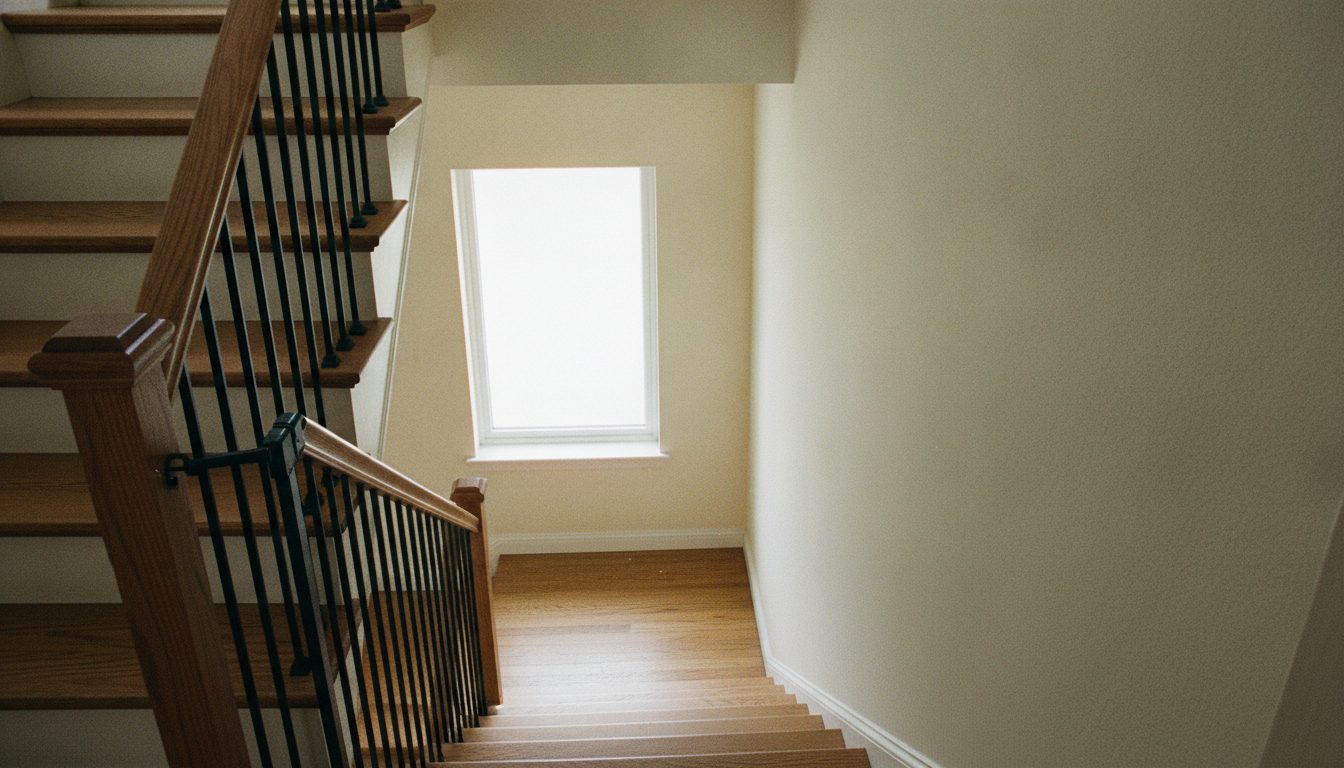
A wobbly railing is one of the easiest fixes a host can make. It is also one of the most overlooked. Test every railing by pushing on it firmly at the top, middle, and bottom.
Codes give you concrete targets here. Most American jurisdictions base residential rules on the International Residential Code. It calls for a guard on any deck or landing more than 30 inches above the ground, with a rail commonly 36 inches high for homes. Openings in the guard should be tight enough that a 4 inch sphere cannot pass through, which is the test that keeps a small child from slipping between balusters. Your local building department can confirm what your jurisdiction has adopted.
Uneven step height is harder to fix but worth flagging clearly if you cannot rebuild the stairs. A single step with a different rise than the others is a common trip point. A strip of contrasting tape along the edge helps a guest notice it before they misjudge it. Add a motion sensor light near any exterior stairway that lacks one, so a guest can actually see the next step in the dark.
Water safety around pools and hot tubs
Water is where a small oversight carries the biggest consequences, especially for children. Many jurisdictions require a fence with a self closing, self latching gate around a pool, so check your local rules before the first booking. For a hot tub, use a locking safety cover whenever the tub is unattended, and look for a cover rated to the ASTM F1346 standard, which is built to hold a child's weight.
Post the commonly cited 104 F maximum water temperature on or near the hot tub, and keep the heater set at or below it. Add a posted line that children need adult supervision in and around the water. What signage to put up in a vacation rental covers wording that reads as helpful rather than alarming.
Kitchen and fire safety basics
Confirm smoke detectors work at every check between stays. Do not wait for the batteries to chirp. A dead detector during a kitchen fire turns a minor mistake into a serious one.
Label stovetop controls clearly if the layout is not obvious. A guest reaching for the wrong burner is a common way hands get burned. Keep a fire extinguisher in the kitchen, mounted somewhere visible rather than tucked in a cabinet a guest would never think to check during an emergency.
Check the fire extinguisher's gauge at each safety pass, and again on a fixed schedule after that. A pressurized canister that has slowly lost charge over a year looks fine on the wall but may not work when someone actually needs it.
Add a stocked first aid kit in a visible spot, commonly under the kitchen sink or in a hall closet, and note its location in the house manual. Check it seasonally for used-up supplies and expired items. A guest with a cut hand should never have to text you to find a bandage.
Outdoor hazards to address
Fire pits, grills, and hot tubs each carry their own risk. Each deserves posted instructions rather than an assumption that guests already know how to use them safely.
A propane grill left with an empty tank or a leaking connection is a common source of frustration and, in rare cases, real danger. Check the connection and the tank level at every turnover, and post basic lighting instructions near the grill for guests unfamiliar with that model.
Uneven ground, exposed tree roots, and low hanging branches along a path from the parking area to the door are easy to overlook. You walk that path daily and know where to step. A guest arriving after dark for the first time does not have that advantage.
Routine safety checks between stays
Build a short safety pass into every turnover, separate from the cleaning checklist. Hazard checks get skipped when a cleaner is focused only on getting rooms ready fast.
| Check | How often |
|---|---|
| Smoke and carbon monoxide detectors | Every turnover |
| Stair and deck railings | Monthly, and after storms |
| Bath mats and rugs | Every turnover |
| Hot tub cover lock and posted temperature | Every turnover where there is a tub |
| Fire extinguisher gauge and first aid kit | Monthly |
| Outdoor steps and walkways | Every turnover, plus after rain or snow |
A written checklist matters more than good intentions here, since a cleaner working fast under time pressure will follow a list before they remember an unwritten habit. Build the safety pass as a fixed set of items in the same order every time, so nothing depends on memory. Many of these fixes overlap with what a family traveling with young children needs, and childproofing a vacation rental goes deeper on that side. Deciding which upgrades are worth buying, from better lighting to a wall mounted extinguisher, is covered in what amenities are worth providing guests.
Liability coverage behind the physical fixes
The worry underneath this whole topic is usually legal exposure, and physical fixes only cover half of it. A standard homeowners policy often excludes injuries that happen during paid short term stays. Ask your insurer directly whether rental use is covered, and get the answer in writing. If it is excluded, a short term rental policy or a landlord policy with an STR endorsement fills the gap.
The platforms add a backstop. Airbnb's published AirCover for Hosts includes liability protection up to $1,000,000 USD, and Vrbo has published a $1,000,000 liability program for bookings through its site, as of this writing. Both come with conditions and exclusions, and both apply only to platform bookings. Treat them as a second layer over your own policy. The one step that costs nothing is the call to your insurer, and it is the step to make before the next guest checks in.

What to Do When Guests Run Out of Supplies Mid Stay
When guests run out of supplies mid stay, restock the same day without blame. Starter supply wording and baseline quantities stop repeat requests.

Checklist for a Guest's First Vacation Rental Check In
Run this 15 point guest check in checklist the day before arrival: access, heat, hot water, wifi, supplies, trash, and exterior lights.
What to Do About Unauthorized Pets Found at Check In
First check the booking record and your pet policy, then message the guest calmly. Most undisclosed pets are an oversight. How to sort it out fairly.