Firewood Etiquette to Set for Cabin Rental Guests

Firewood etiquette for rental guests is something you set in writing before the first cold night. Guests are not born knowing how a wood stack works. Three rules in the house manual cover almost everything:
- Burn only the wood provided at the cabin
- Do not bring firewood from home or buy it on the drive in
- Keep the stack covered and restack anything you move
The rest of this page turns those three lines into wording guests actually follow. It also gives you a burn rate to plan your stocking around.
How much firewood guests typically burn
Plan in splits per night, because that is how guests see the stack. One stove load is commonly 3 to 5 splits. A load of seasoned hardwood typically burns for one to three hours, depending on the stove and the air setting. A guest running evening fires commonly goes through 10 to 15 splits a night. Steady all-day heating in a cold month can double that.
For bulk stocking math, a full cord is a stack 4 feet high, 4 feet deep, and 8 feet long. That is 128 cubic feet. A face cord is the same face one split deep, commonly a third of a cord with 16 inch splits. At evening-fire pace, a face cord typically covers somewhere around 15 to 20 guest nights. Deep cold or all-day burning cuts that fast.
Larger groups and colder months burn faster than a couple visiting in early fall. Adjust what you stock, and what you quote, by season and party size. A flat figure for every guest runs short in January and piles up in May.
Then tell guests roughly how many nights of wood are stocked for their stay. A vague "help yourself" invites a guest to burn three days of wood on the first evening. A specific number, even a rough one, sets a better pace.
If firewood is split between indoor use and an outdoor fire pit, say which stack is which. Guests cannot tell the difference on sight. Mixing the two leaves you short on one or the other by the second night.
Mention whether the wood is ready to burn or still needs breaking down. A guest handed unsplit rounds and no axe will either give up on the fire or improvise with something you would rather they did not touch.
Why outside firewood should stay outside
Ask guests to leave home firewood at home and skip the roadside bundle on the drive in. Wood from another region can carry insects and disease a local supply does not have. Once those pests are loose on your land, they are hard to remove.
Many states and provinces restrict moving firewood across certain distances for exactly this reason. Point guests to your state or provincial agriculture department for the current rule. It varies by place and changes over time.
Give guests the reason alongside the rule. A guest who understands the pest problem follows the rule more willingly than one who reads it as a house preference.
If a guest already brought wood before reading the rule, tell them what to do with it. A spot to leave it outside, away from the covered stack, keeps it separate without an awkward conversation.
Stacking, covering, and keeping wood dry
Show guests where the stack lives and how it should look at checkout. A photo in the house manual beats a written description here. Ask guests to restack anything they move instead of leaving loose pieces scattered near the stove or the fire pit.
Tell guests to put the tarp or cover back after pulling wood out. An uncovered stack after one rainstorm turns a two night supply into damp wood that will not catch. Wet wood that eventually does burn also builds creosote faster. What creosote is and why it matters for cabins explains why that buildup matters beyond a fire that will not stay lit.
If indoor wood sits in a rack near the stove, note how full to keep it. Bringing in a big batch to dry near heat is a fire risk most guests would never think about on their own. How to write wood stove instructions for guests covers that warning alongside the stove's operating steps.
If the stack sits off the ground on a pallet or rack, mention that too. Wood piled on dirt or grass holds moisture. Damp ground contact also invites the pests you are trying to keep out.
What to do when the supply runs low
Give guests one clear next step if they run low before checkout. That might be a number to text, a note to leave, or a self-serve overflow spot. State it once in writing so nobody is guessing on a cold night. If you charge for extra wood on long stays, or restock partway through, explain how that works in the same line.
Keep the outdoor fire supply and its rules separate from indoor wood. Outdoor fire rules to tell cabin guests covers fire pit guidance, including checking current burn restrictions before any fire is lit.
Between stays, count the stack yourself during the turnover. A quick count tells you whether to restock before the next arrival. Put it on the turnover checklist so restocking is a scheduled step instead of a memory test.
A short sign that does most of the work
Most guests never open the full house manual before lighting a fire. A laminated card near the stack carries the three rules to the exact moment they matter. The wood stove and firewood toolkit includes a printable version sized for the stack itself.
Wording that fits everything a guest needs into four sentences:
Firewood is stocked for about three nights. Please burn only this wood, and do not bring in wood from home or elsewhere, since it can carry pests. Keep the tarp on the stack when you are not pulling wood. Text us if you run low and we will bring more.
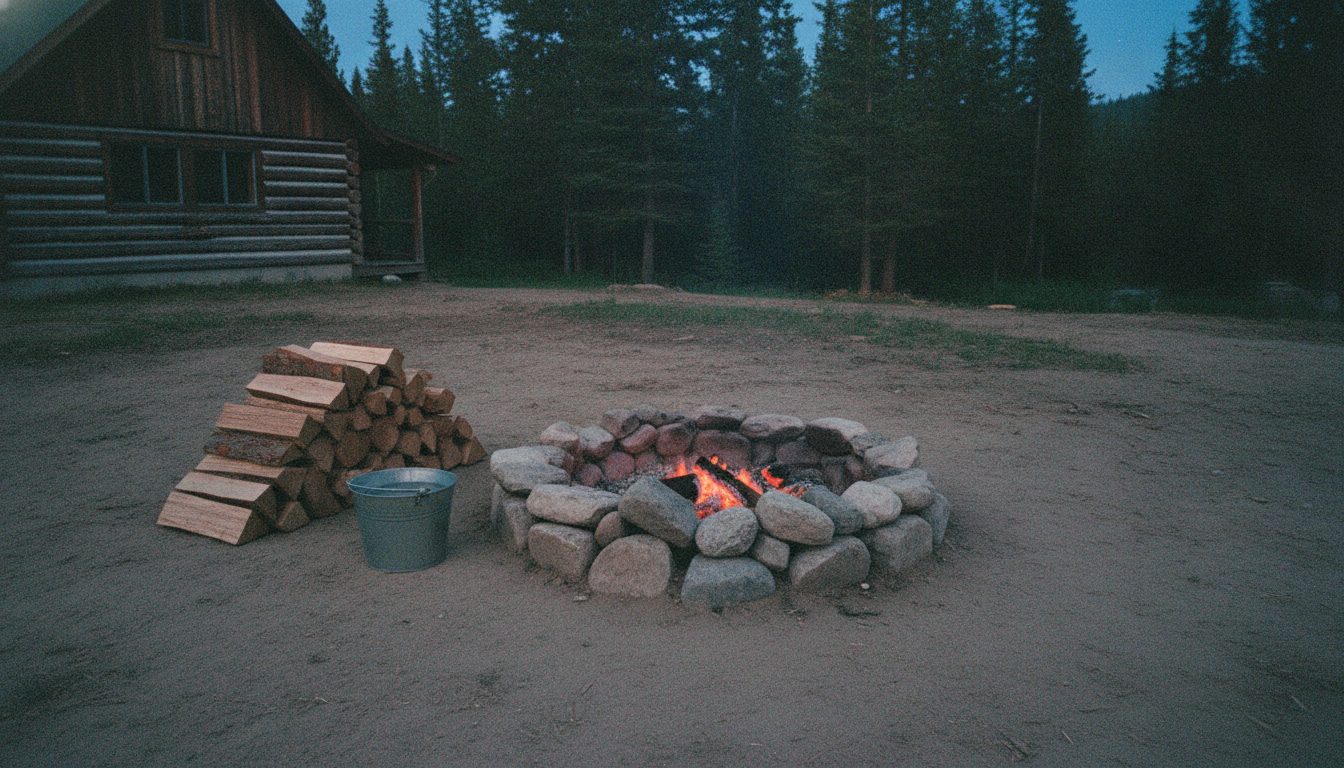
Outdoor Fire Rules to Tell Cabin Rental Guests
Give guests numbered outdoor fire rules: check the current burn ban, keep fires in the pit, drown the coals twice. Includes a ready to post list.
Life Jacket Rules to Explain to Lakefront Rental Guests
Life jacket rules for a lakefront rental: sizing by weight (infant 8-30 lbs, child 30-50), where jackets are stored, and which activities require one.
Signs a Septic Tank Needs Pumping Before Guests Arrive
Slow drains, gurgling, sewer odors, and soggy ground over the field are the main signs. Most tanks need pumping every 3 to 5 years; a pumper confirms.