Outdoor Fire Rules to Tell Cabin Rental Guests
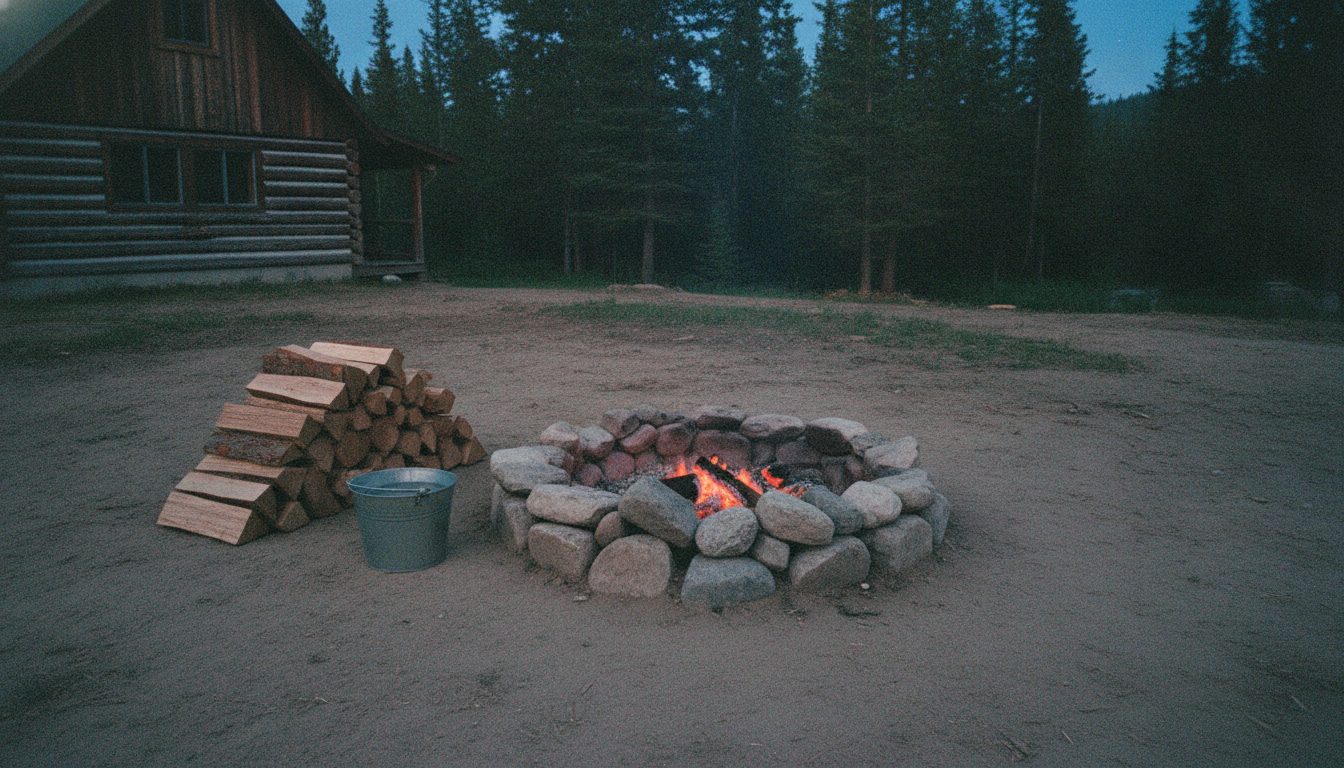
Outdoor fire rules for cabin guests start with one instruction above the rest. Check current local restrictions before lighting anything. Burn bans can go into effect with little notice. A rule that was fine last week may not apply today.
A ready to post list of outdoor fire rules
Post the rules at the fire pit itself, laminated or under glass, and repeat them in the house manual. A numbered list gets read. Here is a version you can copy and adjust to your property:
- Check current fire restrictions before lighting anything. A burn ban overrides every rule below.
- Fires belong in the fire pit only. No fires on the beach, the lawn, or anywhere else on the property.
- Keep the fire small, below the rim of the pit.
- Burn only firewood. No trash, cardboard, or scrap lumber.
- Keep the spark screen on except when adding wood.
- Never leave the fire unattended, even for a few minutes.
- Keep the water bucket filled and within reach whenever the fire is burning.
- Before bed, drown the fire, stir the ashes, and drown them again until everything is cool to the touch.
Eight rules is about the ceiling for a sign anyone reads standing up. The printable signage pack includes fire pit wording in this format, ready to post. The sections below cover the reasoning behind each rule, so your house manual can back the sign up.
Why local restrictions can change without notice
Dry conditions, wind, and wildfire activity nearby can all trigger a burn ban on short notice. A county or district can issue one on a Tuesday that was not there on Monday. Guests planning a fire on their own have no way to know this ahead of time.
Tell guests plainly that a fire being allowed last visit does not mean it is allowed this visit. Conditions change fast in dry months, and the rule follows the conditions, not the calendar.
Make clear the rule comes from the county or fire district rather than from you. Guests generally respect a rule they understand more than one that just sounds strict.
Where guests can check current fire rules
Give guests the name of the local agency that sets fire restrictions. That might be a county office, a fire district, or a state or provincial forestry department. A specific agency name beats a vague instruction to check local rules.
Post this information somewhere guests will actually see it before they consider a fire. Near the fire pit itself and in the house manual both work. A rule buried on page nine of a long document does not get read.
If you know of one reliable place to check current status in your area, name it directly. Guests are far more likely to check one specific source than to search on their own and land on outdated information.
Mention this again in the booking confirmation for stays during dry months, in addition to the house manual. A guest booking in early spring or late summer, when restrictions tend to shift, benefits from seeing the reminder twice.
Grills count differently than open fires
Restriction notices usually separate open flame from enclosed appliances. Under a partial restriction, a propane or gas grill with a shutoff valve often stays legal while wood fires are banned. Charcoal usually counts as an open fire and goes out with the campfires. A full ban can prohibit everything, propane included.
Spell this out for guests, since a blanket no fires rule leaves someone planning to grill dinner unsure whether it covers them. Name each appliance the property has and which category it falls in. The current restriction wording decides every case, so point guests to the source rather than promising the grill is always fine. The same plain wording habit applies indoors, and wood stove instructions deserve the same treatment before the cold months.
Fire pit and campfire basics
State the fire pit's exact boundaries and keep the fire inside them. Guests who improvise a second fire spot, even a small one, create a risk the property was not set up to handle.
Set a clear limit on fire size. A fire that stays small and manageable is easier to control. It is also easier to put out completely when the night ends. Note any distance rule from the cabin, trees, or fences too.
If the fire pit has a spark screen or lid, tell guests it stays on whenever the fire is not being actively tended. On a dry, windy night a single stray spark can travel a long way before it lands.
Remind guests never to leave a fire unattended, even for a few minutes. A fire that seems settled can flare back up in the time it takes to cook dinner inside. Firewood etiquette for cabin rental guests covers how much wood is provided and where it should come from. That matters for outdoor fires as much as the wood stove indoors.
Extinguishing a fire completely
Give guests one drill for putting a fire out. Coals that look dead can still hold enough heat to reignite hours later.
- Drown the fire with water, including the outer coals.
- Stir the ashes so the water reaches everything.
- Drown it again.
- Check that everything is cool to the touch before walking away.
Keep a bucket of water or a hose within reach of the fire pit at all times. Do not store it somewhere guests have to go find. A tool nearby is what actually gets a fire put out properly, more than the instruction alone.
Ask guests to check the fire pit again before bed, even if they think it is already out. This second check catches the fires that looked done an hour earlier but were not.
Tell guests where cooled ashes go if they clean the pit out. A metal can with a lid, set on bare ground away from the cabin, is the only safe container. Never a plastic bin, a paper bag, or the household trash.
If the property sits near dry brush or trees, mention a wider clearance zone around the pit as well. A fire that would be fine on gravel can behave very differently a few feet from dry grass.
What to do if a burn ban is in effect
Tell guests exactly what to do if they arrive and a ban is active. No outdoor fire of any kind, full stop. Offer an alternative if you have one, like a propane fire table, but read the current restriction wording first. A full ban can cover propane appliances too.
Make clear that this applies for the entire stay, from the first night through checkout. Guests sometimes assume a ban lifts on its own after a day or two. It can run for weeks depending on conditions.
If you check restrictions yourself before each stay, say that in the confirmation message too. A guest who knows you already checked worries less about second guessing the rule on arrival.
A short reminder in the booking message keeps expectations consistent with the posted sign:
Please check current fire restrictions before lighting the fire pit, conditions change fast here. If a burn ban is active, no outdoor fires are allowed for any part of your stay. Water is in the bucket by the pit.
Where your liability sits
A guest fire that escapes can land on you as the owner. Some jurisdictions bill fire suppression costs to the person responsible for the fire, and a civil claim can follow damage to a neighboring property. Posted rules, plus a documented reminder in the booking thread, show you treated the risk seriously.
Ask your insurance agent two direct questions. Does the policy cover a fire started by a guest, and does it require anything specific of you, like a spark screen or a clearance distance around the pit. Then confirm the pit itself is legal with your local fire authority, since some districts require a permit or a setback for any permanent fire feature. Write both answers into the house manual, next to the rules list guests will actually read.

Firewood Etiquette to Set for Cabin Rental Guests
Set three firewood rules for rental guests: burn only stocked wood, no outside wood, keep the stack covered. Includes a typical splits-per-night burn rate.
Preparing Guests for a Cabin Stay Versus a City Condo
Guests coming from condo and hotel stays need a short brief before a rural cabin: septic and well limits, wood heat, winter roads, and weak cell service.

Life Jacket Rules to Explain to Lakefront Rental Guests
Life jacket rules for a lakefront rental: sizing by weight (infant 8-30 lbs, child 30-50), where jackets are stored, and which activities require one.