Guest Amenities Restock Checklist for Every Turnover
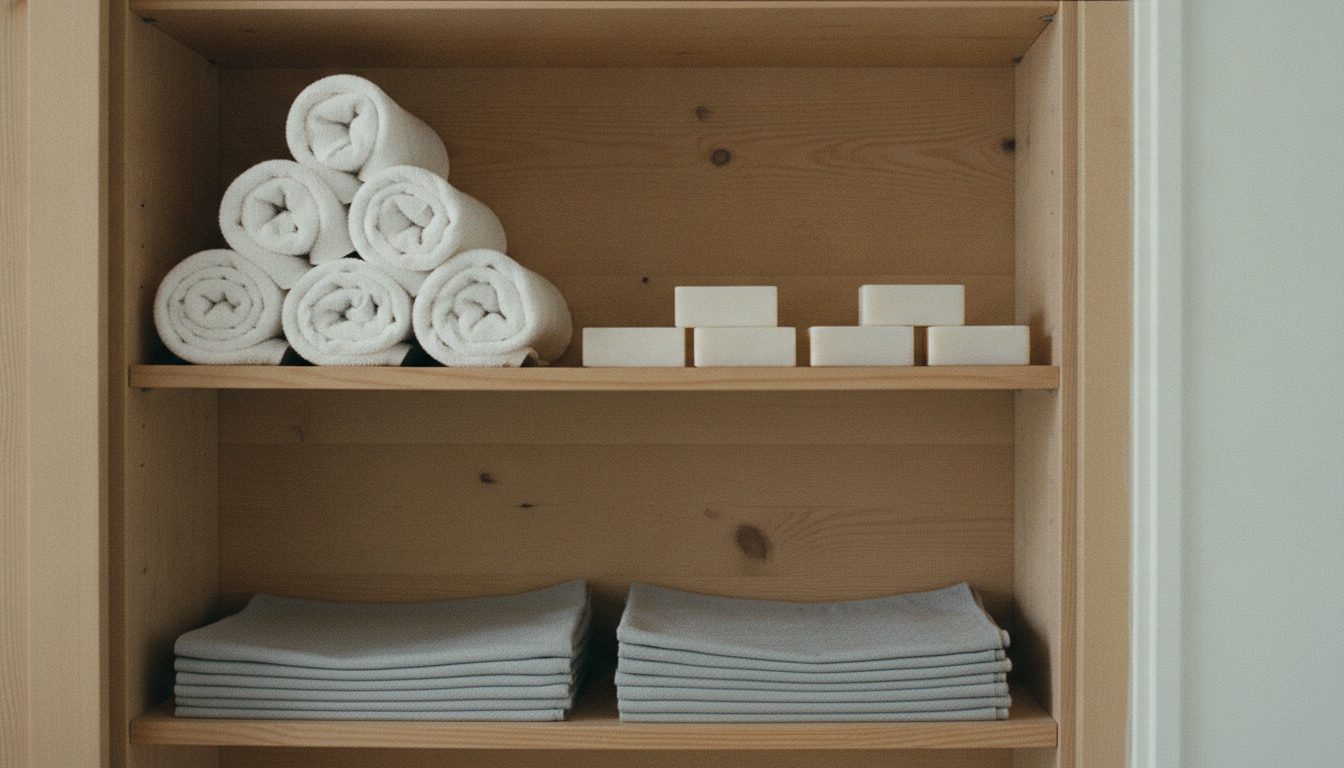
A guest amenities restock checklist covers toiletries, coffee, dish soap, trash bags, and paper products. Each item gets refreshed to a set level before every guest arrives. The list matters less than the fixed level behind it. A guessed refill is how shortages happen.
The restock checklist to copy
Attach a number to every line before you hand this to a cleaner. How to restock consumables between guests covers the process side, including who checks stock and who buys replacements. A turnover cleaning checklist keeps these line items attached to the same sequence as the rest of the clean.
Bathroom, per bathroom
- Toilet paper: full roll on the holder plus 2 visible spares
- Hand soap at the sink, at least half full
- Body wash or bar soap in the shower
- Shampoo and conditioner if you provide them
- Bin liner in place, plus 1 spare under the sink
Kitchen and coffee station
- Coffee, filters, tea, and sweetener for the stay plus a buffer
- Dish soap and a fresh sponge
- Dishwasher pods if there is a dishwasher
- Paper towels: 1 on the holder plus 1 spare
- Trash bags sized to the bins, 3 spares per bin
- Salt, pepper, and cooking oil at a visible level
Laundry
- Detergent pods: 2 to 3 for a short stay if there is a washer
- Dryer sheets or wool balls next to the dryer
Bedrooms and living areas
- Tissue box in each bedroom and the living room
- Bin liner in any bedroom bin, plus 1 spare
- Working batteries in every remote
Bathroom amenities to refresh
The bathroom is where a missing item gets noticed first. Refresh hand soap, shower soap or body wash, and shampoo and conditioner if you provide them. Bring toilet paper to a fixed count on the holder, plus a visible spare. A small trash bag liner belongs in the bathroom bin too. An empty bin with no liner looks unfinished.
If you provide extras like cotton balls, a hair dryer, or a first aid kit, check that each one actually works. Sitting on a shelf is not the same as working. A hair dryer that no longer heats is worse than no hair dryer at all, because a guest expected it to work and found out otherwise.
Kitchen and coffee station items
Coffee is the shortage a guest notices on the first morning of the stay. Treat it as a hard line item, not a nice extra. Stock enough coffee, tea, filters, and sweetener for the length of a typical stay, plus a small buffer. Dish soap, a sponge, and dishwasher pods if you provide a dishwasher round out the kitchen list.
Salt, pepper, and cooking oil are common courtesy items worth a fixed level too. Guests often expect a kitchen to look stocked the way the listing photos showed it. A full kitchen cleaning checklist covers the rest of what that room needs beyond restocking, from appliances to counters.
Paper products and trash bags
Paper towels, tissues, and extra toilet paper for bathrooms beyond the primary one all belong on a fixed count. Trash bags need a set number staged under the kitchen sink and in each bathroom, sized to fit the bins you actually have. A guest who runs out of trash bags on night two starts using whatever they can find, which usually means a bag that does not fit the bin.
Recycling bags, if your area or building requires separation, deserve the same fixed count. Leaving that ambiguous means guests either skip recycling entirely or mix it with trash, and you find out from the disposal service instead of your cleaner.
Post a short note near the bins if your local rules are not obvious to an out-of-town guest. A visitor from another city has no reason to know your area sorts glass separately from cardboard. A labeled bin fixes that better than any cleaner reminder after the fact.
| Area | Bare minimum | Courtesy level |
|---|---|---|
| Bathroom | 1 roll plus spare | Full holder, visible backstock |
| Coffee station | Enough for two mornings | Full stay, plus tea and sweetener |
| Kitchen pantry | Nothing staged | Salt, pepper, oil, basic spices |
| Trash bags | 1 spare per bin | 3 spare per bin, labeled location |
Setting a courtesy level versus a bare minimum
A bare minimum gets a guest through a two-night stay without an obvious gap. A courtesy level goes further. It tries to match what the listing photos implied: a full coffee station, a stocked spice rack, enough toilet paper that nobody thinks about it. Decide which level you are running before you set your par counts. The two produce very different shopping lists.
A budget-priced listing can run a clean bare minimum without disappointing anyone, as long as the listing sets that expectation honestly. A listing priced at the top of its market usually needs the courtesy level to match what guests paid for.
Mixing the two levels within one property is what backfires. A full coffee station next to a bathroom that is out of toilet paper looks like neglect. Pick one level for the whole property and hold every room to it.
Adjusting the list for longer stays
A week-long stay burns through consumables faster than a two-night weekend, so a fixed turnover-day count is not enough on its own for longer bookings. Either stock a higher starting level for stays over a set number of nights, or offer a way for a guest to request a mid-stay top-up.
Laundry supplies scale the same way. Two or three detergent pods covers a short stay where the property has a washer. Leave double that for week-plus bookings, since guests doing mid-stay laundry is exactly what the washer is there for.
Looks like you are settling in. If you need more coffee, paper towels, or trash bags before checkout, just send a message and I will drop some off.
Build the exact quantities into your written checklist so a cleaner is not guessing at what "restocked" means for a five-night booking versus a two-night one. Have the cleaner recount the spares at the same time. A par count only protects you if the count actually happens every turnover.
How to Prevent Mildew in a Rental Bathroom
Mildew prevention is a moisture job: run the bath fan 20 minutes after showers, hold indoor humidity in the EPA's 30-50% band, and recaulk early.
How to Remove Stains From Rental Furniture
Removing stains from rental furniture starts with the fabric code and the stain type. Wine, grease, ink, urine, and vomit each get a first move here.

What Is Strip and Remake Cleaning for Rentals
Strip and remake is the practice of stripping every bed to the mattress each turnover and remaking it fresh, instead of tidying what looks used.